

Die casting is a process where precision is engineered into every step. The ability to produce thousands, or millions, of identical components depends on how well a die casting service manages tooling, thermal conditions, alloy behavior, and machine parameters. Quality, tolerances, and repeatability are not independent goals; they are interconnected outcomes of a controlled, disciplined manufacturing environment. Understanding how a professional die casting service maintains this control helps buyers evaluate suppliers and anticipate the performance of their parts.
Key Takeaways: How a Die Casting Service Controls Quality, Tolerances, and Repeatability
- Quality in die casting is driven by tooling precision, thermal stability, and disciplined process control.
- Tolerances depend on die design, gating strategy, venting, and the consistency of the injection profile.
- Repeatability is achieved through stable cycle times, controlled melt temperature, and real time monitoring of machine parameters.
- A strong die casting service uses inspection data, tooling maintenance, and statistical process control to maintain dimensional stability across long production runs.
- Buyers evaluating suppliers should look for documented process controls, in house tooling capability, and evidence of consistent quality monitoring.
Tooling: The Foundation of Dimensional Accuracy
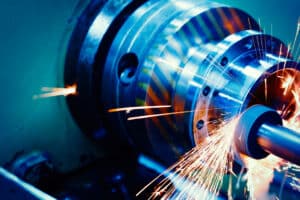 Every high quality die casting operation begins with tooling. The die itself determines the geometry, surface finish, and stability of the part. When a die is machined with precision, the cavity, parting lines, and slide interfaces all work together to maintain consistent dimensions.
A well-designed gating and runner system ensures the molten metal fills the cavity evenly, reducing turbulence and minimizing porosity. Venting and overflow features help remove trapped gases and stabilize the fill pattern. These design choices directly influence the tolerances a supplier can hold and how consistently those tolerances can be repeated.
Tooling also affects long term performance. As a die wears, dimensions can drift. A mature die casting service anticipates this by scheduling maintenance cycles, polishing critical surfaces, and replacing inserts before wear becomes visible in the parts.
Thermal Control: Managing the Behavior of Molten Metal
Die casting is fundamentally a thermal process. Temperature variation, either in the die or the molten metal, is one of the biggest threats to dimensional stability.
A controlled die temperature ensures predictable metal flow and solidification. Services use preheating systems, water or oil based temperature control units, and thermal mapping to maintain uniformity across the tool. When the die is too cold, metal freezes prematurely; when it’s too hot, flash and dimensional drift become more likely.
The melt temperature is equally important. Alloy viscosity, shrinkage, and mechanical properties all depend on maintaining a stable temperature window. Modern operations use automated furnaces and continuous monitoring to keep the melt within a narrow range, ensuring each shot behaves like the one before it.
Process Monitoring: Keeping Every Cycle Consistent
Repeatability in die casting comes from controlling the injection cycle. Shot speed, intensification pressure, fill time, and solidification behavior must remain consistent from part to part. Even small deviations can shift tolerances or introduce defects.
Advanced die casting services track these parameters in real time. Shot velocity curves, hydraulic pressure profiles, die temperature, cycle time, and vacuum levels (when applicable) are monitored continuously. When a parameter begins to drift, operators can intervene before the parts fall out of spec. This proactive approach is one of the strongest indicators of a supplier capable of holding tight tolerances over long production runs.
Alloy Quality: Ensuring Clean, Consistent Material
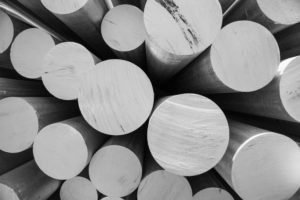 The alloy itself plays a major role in quality. Impurities lead to porosity, brittleness, and surface defects, so metal cleanliness is a priority. Filtration, degassing, and proper furnace maintenance help maintain a stable melt.
Chemical consistency is equally important. A die casting service that controls alloy composition, removes oxides, and manages dross effectively will produce parts with predictable mechanical and dimensional performance.
Inspection and Quality Assurance: Closing the Loop
Quality control is a continuous feedback loop. Dimensional verification may involve CMM inspection, optical measurement, or dedicated gauges. Defect detection can include X ray analysis, pressure testing, or surface evaluation.
The most capable die casting services use this data to refine tooling, adjust process parameters, and maintain long term repeatability. Statistical process control (SPC) is often used to identify trends before they become defects, allowing the supplier to correct issues early.
Maintaining Repeatability Over Long Production Runs
Repeatability is the ultimate test of a die casting service. It reflects how well the supplier manages tooling wear, thermal balance, machine stability, and alloy consistency. Over thousands of cycles, even minor variations can accumulate.
This is why disciplined tooling maintenance, real time monitoring, and SPC are so important. They prevent gradual drift and ensure that the first part and the ten thousandth part meet the same dimensional expectations.
Find Your Die Casting Service
Quality, tolerances, and repeatability in die casting are the result of precise tooling, controlled thermal conditions, stable machine parameters, and continuous monitoring. A die casting service that invests in these areas can deliver consistent, high performance components across long production runs. For buyers, understanding these factors makes it easier to evaluate suppliers and select partners who can meet demanding requirements.
When evaluating die casting suppliers, look for partners who demonstrate strong tooling capability, disciplined process control, and documented quality systems. These are the operations that deliver stable tolerances, reliable repeatability, and consistent performance across every production run. Contact DyCast Specialties to see how a die casting service can improve your operations.
Comments are closed