

Die casting parts support demanding applications where dimensional accuracy, repeatable strength, and consistent surface quality are required. In industries that rely on tight tolerances and stable mechanical behavior, cast components must be produced with verified alloys, controlled process parameters, and precise tooling. DyCast manufactures aluminum and zinc die cast parts engineered for performance in automotive, electronics, medical, industrial, and consumer systems.
Die casting delivers complex shapes, smooth surfaces, and reliable strength with short cycle times. For engineers and technical buyers, part quality directly influences assembly fit, long term reliability, and total lifecycle cost.
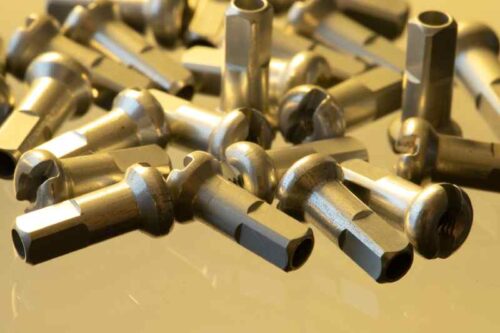 Performance Requirements for Die Casting Parts
Die cast components must maintain dimensional stability, structural integrity, and surface consistency across high-volume production. Tooling accuracy, alloy behavior, and process control determine how well a part performs under load, temperature variation, and environmental exposure.
Key engineering considerations include tensile strength, elongation, thermal behavior, corrosion resistance, and internal porosity. These factors guide how a part responds to mechanical stress and operational conditions.
Tooling Accuracy and Dimensional Control
Tooling defines the geometry, surface finish, and dimensional consistency of die cast parts. DyCast maintains controlled machining, cavity alignment, and surface preparation to ensure predictable part behavior.
Dimensional accuracy supports:
- Reliable assembly fit
- Reduced machining requirements
- Stable tolerance control
- Consistent part geometry across production runs
Tooling verification ensures that each part meets the required specifications.
Process Control and Casting Behavior
Die casting performance depends on controlled temperature, pressure, fill rate, and cooling behavior. DyCast maintains documented process control to support:
- Predictable mechanical properties
- Reduced porosity
- Stable surface finish
- Consistent internal structure
Process stability is needed for parts used in high-stress or high-volume applications.
Surface Quality and Finishing Options
Die cast parts can be produced with smooth surfaces suitable for direct use or post-processing. DyCast supports finishing options including:
- Machining
- Deburring
- Coatings
- Plating
- Surface texturing
Surface quality influences appearance, corrosion behavior, and functional performance.
Industry-Specific Requirements
Automotive
Parts must support thermal variation, vibration, and mechanical load. Aluminum alloys provide lightweight strength for housings, brackets, and structural components.
Electronics
Die cast parts require tight tolerances, smooth surfaces, and stable thermal behavior. Zinc alloys support fine detail and consistent geometry.
Medical
Medical components require cleanable surfaces, dimensional accuracy, and verified materials. Controlled casting behavior supports reliable performance.
Industrial
Industrial parts must withstand abrasion, impact, and continuous load cycles. Alloy selection and process control support long service life.
Consumer
Consumer products rely on appearance, fit, and durability. Die casting supports complex shapes and consistent surface quality.
Quality Assurance and Verification
DyCast maintains documented inspection and testing procedures to confirm part performance. Buyers can expect:
- Dimensional inspection
- Alloy verification
- Surface quality checks
- Porosity evaluation
These checks ensure that each part meets the required performance level.
Die Casting Parts FAQ
What Are Die Casting Parts?
Die casting parts are components formed by injecting molten metal into precision tooling to achieve accurate geometry and consistent strength.
Which Alloys Are Used for Die Casting?
Aluminum and zinc alloys are selected based on strength, castability, corrosion behavior, and application requirements.
How Accurate Are Die Cast Parts?
Die cast parts can achieve tight tolerances and consistent geometry when tooling and process control are maintained.
Can Die Cast Parts Be Finished or Machined?
Yes. Machining, coating, plating, and other finishing processes can be applied based on functional or aesthetic needs.
DyCast manufactures aluminum and zinc die cast parts for automotive, electronics, medical, industrial, and consumer applications. Their engineering capability, verified materials, and controlled process environment support reliable performance and consistent quality.