

Alloy die casting is a precision manufacturing process that uses controlled pressure to force molten metal into engineered steel molds. This method supports the production of complex shapes, tight dimensional profiles, and repeatable parts across high-volume workflows. Alloy die casting is used with a range of non-ferrous metals, each selected for its mechanical behavior, corrosion performance, and application specific advantages.
At DyCast, we produce high-quality alloy die cast components for industrial, commercial, and technical applications. Our experience with multi-metal casting, tooling design, and controlled process parameters supports consistent part quality and dependable long term performance.
What Is Alloy Die Casting?
Alloy die casting is a controlled process where molten metal is injected into a steel mold under pressure. The mold cavity defines the final part shape, allowing the production of detailed features, thin walls, and consistent surface profiles. This process supports precision metal forming in industries that require repeatable geometry and stable mechanical behavior.
Alloy die casting is commonly used for components that must balance strength, weight, and corrosion resistance. The process supports high-volume production, predictable dimensional accuracy, and reduced machining requirements.
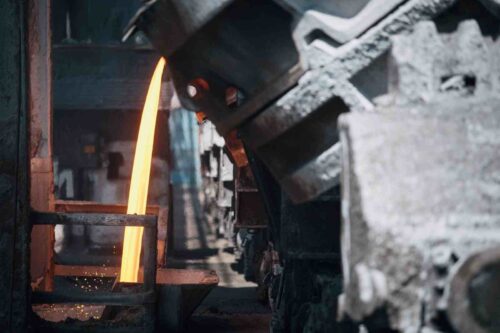 Common Alloys Used in Die Casting
Different alloys are selected based on strength, corrosion behavior, thermal stability, and fluidity during casting. DyCast works with a range of alloys to support varied performance requirements:
Aluminum Alloys
Aluminum alloys support lightweight designs, stable dimensional behavior, and strong corrosion resistance. Their fluidity helps fill complex mold cavities and maintain consistent surface profiles.
Magnesium Alloys
Magnesium alloys support extremely lightweight components with good strength-to-weight ratios. They are used in applications where reduced mass improves efficiency or handling.
Zinc Alloys
Zinc alloys support detailed features, tight tolerances, and smooth surface finishes. They are often used for components requiring fine detail or high repeatability.
Why Alloy Selection Matters
Alloy selection influences part strength, corrosion behavior, thermal performance, and long-term durability. Choosing the correct alloy supports predictable performance in industrial casting applications and helps ensure the final component meets its mechanical and environmental requirements.
Advantages of Alloy Die Casting
Alloy die casting provides several performance benefits across manufacturing and industrial workflows:
- Consistent dimensional accuracy for complex shapes
- High production efficiency for large-volume runs
- Strong mechanical behavior across varied operating conditions
- Reduced machining requirements due to near-net-shape forming
- Stable surface profiles suitable for coatings or finishing
These advantages support reliable part performance in systems that require repeatable geometry and long service life.
Applications of Alloy Die Cast Components
Alloy die cast parts are used across industries that require stable mechanical behavior and precise dimensional control:
- Automotive systems
- Electronics housings
- Industrial machinery
- Consumer products
- Lighting and electrical assemblies
- Equipment enclosures
These applications benefit from the strength, stability, and repeatability provided by alloy die casting.
Performance Characteristics of Alloy Die Castings
Alloy die cast components support predictable performance across varied operating environments:
- Dimensional stability for thin-wall and complex geometries
- Corrosion resistance based on alloy selection
- Thermal conductivity for heat-transfer applications
- Mechanical strength for structural or load bearing parts
- Surface uniformity suitable for coatings, plating, or machining
These characteristics help maintain part reliability in demanding workflows.
Alloy Die Casting FAQs
How Strong Are Alloy Die Cast Components?
Alloy die cast parts support stable mechanical strength and predictable performance across varied operating conditions. Strength levels depend on the specific alloy and part design.
Can Alloy Die Casting Parts Handle High Temperatures?
Many alloys maintain structural stability at elevated temperatures. Aluminum and magnesium alloys support controlled performance in applications involving heat exposure.
What Surface Finishes Can Be Applied to Alloy Die Castings?
Alloy die casting parts can be coated, plated, painted, or machined. Surface finish options depend on the alloy and the application requirements.
Quality Alloy Die Castings from DyCast Specialties
DyCast Specialties Corporation provides complete alloy die casting services, including tooling, casting, machining, finishing, and inspection. Our facility supports tight tolerances, consistent part quality, and dependable production workflows for a wide range of industries.
Contact us today to learn how our alloy die cast components can support your project requirements.