

High pressure die casting is a proven method for producing complex, multi feature components with stable geometry and consistent output. Its combination of rapid metal flow, engineered tooling, and controlled solidification allows manufacturers to create shapes that would be difficult or inefficient to achieve through machining, stamping, or lower pressure casting processes.
Key Takeaways: Why High Pressure Die Casting Works Well for Complex Parts
- High pressure die casting supports thin wall and multi feature geometry through rapid metal flow and controlled solidification.
- Precision tooling enables stable dimensions and consistent output across long-running production programs.
- Integrated features reduce secondary machining, shorten lead times, and improve cost efficiency.
- Aluminum, magnesium, and zinc alloys expand design flexibility for structural, thermal, and housing applications.
 How Fast Metal Flow Supports Complex Geometry
High pressure die casting forces molten alloy into the die at high velocity. This rapid fill allows the metal to reach thin wall sections, sharp transitions, and detailed contours before cooling begins. The process supports intricate features such as ribs, pockets, bosses, and integrated mounting points without requiring secondary machining.
The ability to fill narrow or multidirectional paths is one of the main reasons the process performs well on parts with dense geometry or tight packaging constraints.
Precision Tooling Drives Dimensional Stability
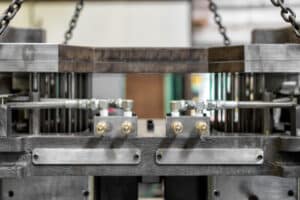
The die itself is engineered to guide metal flow, manage cooling, and maintain consistent shrink behavior. Gating, venting, and cooling channels are positioned to reduce turbulence and support uniform solidification.
This tooling driven control helps maintain stable dimensions across large production runs, even when the part includes multiple interacting features that must align reliably.
Integrated Features Reduce Secondary Operations
- Threads, bosses, and mounting points formed directly in the die
- Channels, pockets, and ribs cast to near net shape
- Surfaces aligned without repositioning or multiple setups
- Reduced machining time and shorter lead times
- Lower overall program cost for medium to high volume production
This consolidation of features is a major advantage for procurement teams managing cost, throughput, and repeatability.
Controlled Solidification Improves Repeatability
Rapid cooling inside the die helps maintain uniform shrinkage and reduces variation between cycles. This is especially important for parts that require:
- Consistent wall thickness
- Predictable fit with mating components
- Alignment between surfaces or mounting points
The process supports stable geometry even when the part includes multiple thin wall sections or complex transitions.
Material Options Expand Design Flexibility
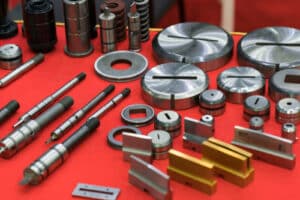 Aluminum, magnesium, and zinc alloys used in high pressure die casting offer strong mechanical properties, corrosion resistance, and good thermal behavior. These characteristics make the process suitable for housings, brackets, structural components, and heat dissipating parts across multiple industries.
Where Complex Geometry Matters Most
High pressure die casting is widely used in automotive, aerospace, electronics, industrial equipment, and consumer products. These sectors rely on compact, multi feature components that must be produced consistently at scale, making the process a strong fit for long-running programs.
Experienced High Pressure Die Casting Services
High pressure die casting remains a strong option for complex parts that require stable geometry, integrated features, and consistent performance across large production runs. Its ability to combine speed, precision, and material versatility makes it a reliable choice for teams balancing cost, throughput, and dimensional expectations.
If you’re evaluating suppliers for high pressure die cast components, reach out to DyCast to discuss your print, volume requirements, and performance targets. We can help you shape a version tailored to your sourcing workflow.
Comments are closed