

Aluminum die casting remains one of the most efficient ways to produce strong, lightweight, dimensionally consistent metal components at scale. Whether you’re an engineer evaluating manufacturability or a procurement team comparing production methods, understanding how the aluminum die cast process works from start to finish helps you make better decisions about cost, quality, and performance.
1. Alloy Selection and Material Preparation
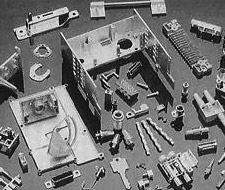 Every aluminum die cast project begins with choosing the right alloy. Common choices include A380, A383, A360, A413, and other casting grade aluminum blends, each offering different balances of strength, corrosion resistance, fluidity, and thermal performance.
Once selected, the alloy is melted in a furnace and held at a controlled temperature to ensure proper flow and consistency. Cleanliness matters here, as impurities can lead to porosity, weak spots, or cosmetic defects later in the process.
2. Tooling Design and Die Preparation
The die is the heart of the process. It’s a precision machined steel mold built to withstand repeated high pressure injections. Before production begins, the die is:
- Heated to a stable operating temperature
- Coated with a release agent
- Checked for alignment, venting, and gating integrity
Proper die preparation reduces cycle time, improves surface finish, and helps maintain dimensional accuracy across long production runs.
3. Injection of Molten Aluminum
With the die ready, molten aluminum is injected into the cavity using either:
- Cold chamber die casting, the most common method for aluminum
- Hot chamber die casting, used for lower melting alloys like zinc
In cold chamber systems, a measured shot of molten aluminum is ladled into the chamber and forced into the die under high pressure. This pressure ensures the metal fills every detail of the cavity, even thin walls and complex geometries.
4. Solidification and Cooling
Once the cavity is filled, the aluminum rapidly cools and solidifies. Cooling time depends on:
- Wall thickness
- Alloy type
- Die temperature
- Part geometry
Controlled cooling is important for minimizing internal stresses and ensuring consistent mechanical properties.
5. Die Opening and Part Ejection
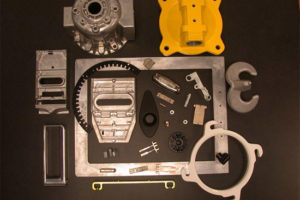 After solidification, the die opens and ejector pins push the newly formed casting out of the cavity. At this stage, the part includes gates, runners, and overflows, which are all intentional features that help the metal flow properly during injection.
A well designed die ensures smooth ejection, reducing wear on tooling and preventing part deformation.
6. Trimming and Finishing
Next, excess material is removed through trimming, sawing, or automated cutting. Depending on the application, additional finishing steps may include:
- Deburring
- Shot blasting
- CNC machining
- Surface treatments or coatings
These steps refine the part’s appearance, improve dimensional accuracy, and prepare it for assembly or downstream processing.
7. Inspection and Quality Assurance
Quality checks verify that each casting meets dimensional, mechanical, and cosmetic requirements. Common inspection methods include:
- Coordinate measuring machines (CMM)
- X ray or CT scanning for internal porosity
- Pressure testing for sealed components
- Visual and surface inspections
Process control and consistent monitoring help maintain repeatability across high volume production.
8. Packaging and Delivery
Once approved, parts are cleaned, packaged, and prepared for shipment. For OEMs and industrial buyers, packaging may be customized to protect sensitive surfaces or streamline assembly line integration.
Why Aluminum Die Casting Works So Well for Modern Applications
The aluminum die cast process delivers:
- High production efficiency
- Excellent dimensional stability
- Strong, lightweight components
- Tight tolerances
- Complex shapes with minimal machining
These advantages make aluminum die cast parts ideal for automotive, electronics, industrial equipment, consumer products, and countless other sectors.
Begin Your Aluminum Die Cast Process
Understanding the aluminum die cast process from start to finish helps engineers and procurement teams evaluate manufacturability, cost, and long term performance. When matched with the right alloy, tooling strategy, and production partner, aluminum die casting offers a reliable path to high quality components at scale.
If you’re evaluating aluminum die cast components for an upcoming project, our team can help you review design requirements, alloy options, tooling considerations, and production strategies to ensure the process aligns with your performance and cost goals. Connect with us to discuss your application and get expert guidance from concept through production.
Comments are closed