

Zinc die casting has become one of the most trusted manufacturing processes for OEMs that need millions of consistent, high-precision components. Its unique combination of material performance, dimensional stability, and production efficiency makes it especially valuable in industries where reliability is important and tolerances are tight. Whether the end use is automotive, electronics, industrial hardware, or consumer products, zinc die casting offers a level of repeatability and cost control that few other processes can match.
Key Takeaways: Why OEMs Choose Zinc Die Casting for High-Volume Production
- Zinc alloys deliver exceptional strength, stability, and impact resistance.
- Die casting cycle times are among the fastest of any metal-forming process.
- Thin-wall capability supports lightweight, high-performance designs.
- High repeatability ensures consistent quality across long production runs.
The Advantages Driving OEM Adoption
1. Material Properties That Support Demanding Applications
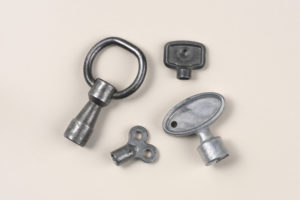 One of the primary reasons OEMs rely on zinc die casting is the inherent performance of the material itself. Alloys such as Zamak 3, Zamak 5, and ZA 8 offer a combination of strength, ductility, and dimensional stability that is difficult to achieve with other metals. Zinc maintains its shape and tolerances even when parts are produced in extremely high quantities, which is needed for components that must fit and function perfectly in assemblies that leave little room for variation.
Zinc’s natural hardness and wear resistance make it great for moving mechanisms, levers, and components that experience repeated stress. Its thermal and electrical conductivity allow it to serve in demanding electronic and electromechanical applications. And because zinc provides inherent EMI/RFI shielding, it is frequently used in housings and enclosures where signal integrity is needed. These characteristics give OEMs confidence that zinc components will perform reliably over the full life of the product.
2. Fast Cycle Times That Keep Production Moving
Speed is another major advantage. Zinc’s relatively low melting point allows it to fill molds quickly and solidify rapidly, enabling cycle times that are often measured in seconds. For OEMs managing large-scale programs, this speed directly translates into higher throughput and more predictable production scheduling.
Fast cycle times also reduce the cost per part, especially when production volumes reach the hundreds of thousands or millions. OEMs benefit from shorter lead times, the ability to respond quickly to market demand, and the confidence that production can scale without compromising quality. In industries where timing is everything, automotive model launches, consumer electronics releases, or industrial equipment rollouts, zinc die casting provides a competitive edge.
3. Superior Surface Finish and Thin Wall Capability
Zinc die casting is known for producing smooth surfaces straight out of the mold. This reduces or eliminates the need for secondary finishing processes, which not only saves cost but also shortens production timelines. For OEMs, this means fewer steps, fewer vendors, and fewer opportunities for variation.
The process also supports extremely thin walls without sacrificing strength. Engineers can design lightweight components that still meet demanding structural requirements, which is particularly valuable in automotive and electronics applications where every gram matters. The ability to maintain strength in thin-wall designs allows OEMs to innovate without compromising durability or performance.
4. Long Tool Life That Lowers Total Cost of Ownership
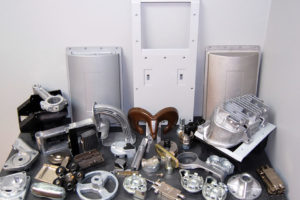 Tooling longevity is one of the most overlooked but financially significant advantages of zinc die casting. Because zinc melts at a lower temperature than aluminum or magnesium, the molds experience far less thermal stress. As a result, tools last significantly longer, often producing hundreds of thousands or even millions of shots before requiring major maintenance.
For OEMs, this extended tool life reduces long term costs and minimizes production interruptions. It also allows for more accurate forecasting of tooling budgets over the life of a program. When a single tool can support multiple years of high-volume production, the total cost of ownership becomes far more attractive than competing processes.
5. Design Flexibility That Reduces Part Count
Zinc die casting offers a level of design freedom that enables engineers to consolidate multiple components into a single, highly functional part. Features such as internal threads, snap-fits, hinges, and fastening elements can be cast directly into the component, eliminating the need for secondary machining or assembly.
This consolidation reduces part count, simplifies supply chains, and improves reliability by removing potential failure points. OEMs benefit from improved assembly processes, fewer purchased components, and a more efficient overall product architecture. In many cases, zinc die casting allows engineers to rethink how a product is built, resulting in both performance improvements and cost savings.
6. Sustainability and Material Efficiency
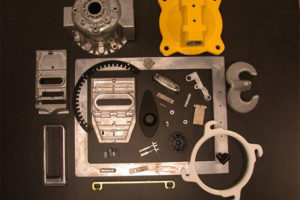 Sustainability has become a priority for OEMs across industries, and zinc die casting aligns well with these goals. Zinc is fully recyclable, and the die casting process itself generates very little scrap. Any excess material can be re melted and reused without degrading performance, supporting a closed loop manufacturing model.
Beyond material reuse, the efficiency of the process, from rapid cycle times to long lasting tooling, contributes to a more environmentally responsible production approach. OEMs looking to reduce waste, energy consumption, and overall environmental impact often find zinc die casting to be a strong fit for their sustainability initiatives.
Partner With DyCast for High Volume Zinc Die Casting
Zinc die casting offers a rare combination of speed, precision, durability, and cost efficiency. For OEMs managing large-scale production programs, these advantages translate into consistent quality, predictable costs, and long-term reliability. As industries continue to demand lighter, stronger, and more complex components, zinc die casting remains one of the most valuable and versatile manufacturing processes available.
DyCast specializes in delivering high precision zinc die cast components for OEMs that require consistency at scale. With advanced equipment, engineering expertise, and a commitment to quality, DyCast helps manufacturers bring complex designs to life. Contact DyCast today to get started!
Comments are closed